How a shared working culture is born from diversity
International skilled workers are essential in many sectors in Germany. At the same time, everyday working life sees a clash of different expectations, communication styles and cultures. Whilst this can lead to challenges, it also offers the opportunity to design work processes more thoughtfully and learn from each other.
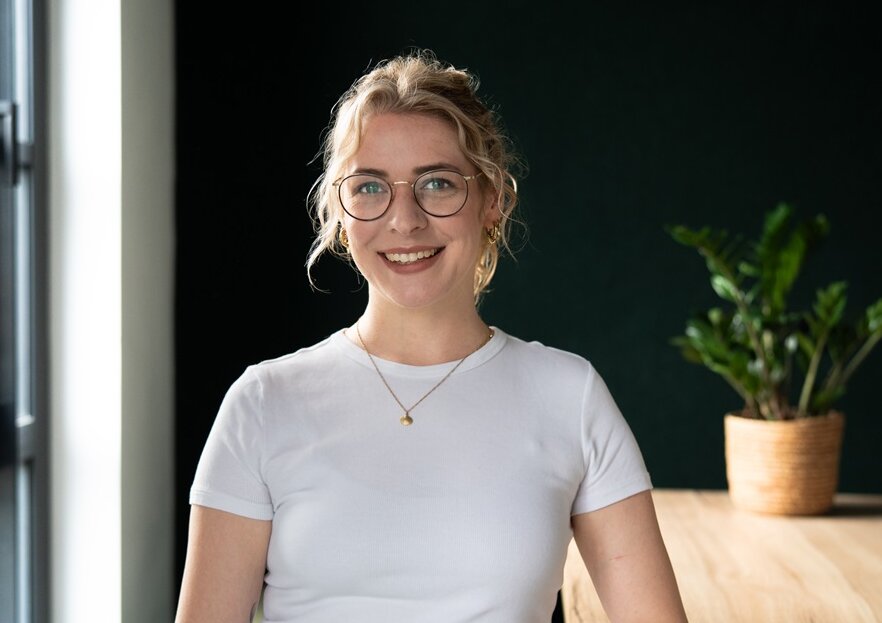
In this interview, Sabine Schmid, Managing Director and founder of EgyptPro GmbH, talks about her own experiences with cultural differences in everyday working life. Sabine Schmid has years of experience in recruiting and placing skilled workers from Egypt and founded her own recruitment agency – EgyptPro GmbH – two years ago.
Using specific examples, she demonstrates how different realities of work and life intersect, and how openness, clear agreements and mutual understanding can lead to sustainable solutions within a team.
"Much of what we perceive as 'culturally determined' simply has to do with being new: in a new country, a new company and a new language."
Sabine Schmid, Managing Director and Founder of EgyptPro
Interview with Sabine Schmid, Managing Director and Founder of EgyptPro
Ms Schmid, you have been recruiting and placing international skilled workers from Egypt for many years. How can cultural differences influence day-to-day working life?
Sabine Schmid: I think we sometimes overestimate cultural differences – whilst at the same time underestimating how formative our own work culture is. What long-serving staff take for granted often needs to be made explicit for new colleagues. Much of what we perceive as “culturally determined” simply has to do with being new: in a new country, a new company and a new language.
Many international professionals initially observe, listen and find their bearings. This can be interpreted as reserve or a lack of initiative – although it is often driven by politeness and the desire to get everything right. In my experience, a “yes” sometimes means “I’ve understood”, rather than an immediate “I can do that”. As soon as they feel more confident, most of them contribute with questions and their own ideas just as naturally as their German colleagues do.
An example: In many German companies, the motto is, “If something is unclear, ask straight away”. However, international professionals who are new to Germany often want to observe first and not be a burden to anyone.
Another example: many skilled workers have studied German intensively and have a good command of the language. In their day-to-day work, however, they suddenly encounter dialects, abbreviations or idioms such as “Mach’s gschwind" or “Das läuft über die AV”. This has less to do with culture than with finding their bearings.
Of course, there are also issues that need to be approached differently. These include differing views on religion and everyday working life. In Germany, workplace procedures generally take precedence, whereas, for example, Friday prayers hold special significance for many Muslims.
"The differences are often smaller than many people think."
Sabine Schmid, Managing Director and Founder of EgyptPro
What experiences have you had with cultural differences in the day-to-day working lives of international skilled workers?
Sabine Schmid: To be honest, the differences are often smaller than many people think. Most Egyptian skilled workers come to Germany highly motivated. They want to work, make their contribution and show what they can do.
However, there are still minor differences that can lead to misunderstandings in everyday life. In Egypt, for example, many workflows are more strictly prescribed. In Germany, employees are more often expected to set their own priorities and organise themselves independently. Once this expectation has been made clear, collaboration usually works very quickly and smoothly.
Another difference stems from the fact that the weekend in Egypt falls on Friday and Saturday. Friday prayers therefore hold special significance for many Muslims from Egypt and, in their home country, have little impact on their working day.
We once had a young Egyptian man working as a landscape gardener who quite naturally assumed he would be able to visit the nearby mosque for Friday prayers at midday – not to “roll out the carpet”, as is often said, but because Friday prayers had been a completely normal part of his daily life in Egypt up to that point. On the other hand, lunch breaks on building sites or in gardening and landscaping are often pragmatic, short and tightly scheduled. At first, the employer reacted with a lack of understanding. It was only after discussing their respective expectations that a solution was found: if the workflow allows, the young man is permitted to extend his lunch break to 60 minutes and make up the time later. If this is not possible for operational reasons, he can retreat to a quiet place for about 15 minutes to perform his prayers.
To me, this shows that the real challenge is not religion, but the different assumptions held by both sides – without these being explicitly articulated at first. It was only through dialogue that a pragmatic solution was found that both sides could live with.
"In my view, however, it is less about 'bridging' cultural differences and more about developing a shared working culture. Integration does not just take place in the workplace, but also in the stairwell, in the neighbourhood and in everyday life together."
Sabine Schmid, Managing Director and Founder of EgyptPro
How can these cultural differences be balanced?
Sabine Schmid: Above all, through empathy, openness and mutual learning. In my view, however, it is less about “bridging” cultural differences and more about developing a shared working culture.
Speaking from my own experience, most of the challenges in recruiting international professionals arise not from where a person comes from, but from unclear processes, insufficient communication and unspoken expectations, as well as from a one-sided understanding of what is expected of the employer and what is expected of the employee. This is precisely where the greatest impact can be made with the right support.
Interestingly, we often experience the biggest differences not in the workplace, but in everyday life: the classic examples – waste sorting, quiet hours, cooking in common kitchens with strong spices, or the virtually universal desire to spend time outdoors with others when the weather is fine. Here, too, the same applies: what is taken for granted by one side must first be explained to the other.
Integration does not just take place in the workplace, but also in the stairwell, in the neighbourhood and in everyday life together.
About EgyptPro
EgyptPro GmbH specialises in the recruitment and placement of skilled workers from Egypt. It is particularly important to the company that people are at the centre of everything and that work is carried out with a great deal of empathy and understanding. “We put people first, not algorithms,” says Sabine Schmid, Managing Director and Founder. That is why EgyptPro supports companies and skilled workers as part of a personalised 360° approach from a single source – from the selection process right through to successful arrival in Germany and far beyond mere placement.
About the author
Katharina Weckend, Content & SEO Manager
Katharina joined lingoking as a Content and SEO Manager in 2024. She handles our content and SEO strategy and writes texts for our website, guide and other lingoking media. “I am happy I get to pass on knowledge in our lingoking guide and help break down language barriers.”