The role of sworn translators – a glimpse into the future
Katharina Weckend | 18.01.2026
In the past, translating texts into other languages was the preserve of professional translators, but today anyone can easily translate texts into another language using DeepL, Google Translate and similar tools. The professional title of translator was and is not protected, which essentially means that anyone can call themselves a translator.
Consequently, you have to check for yourself whether the translator has appropriate qualifications.
The professional title of sworn translator provides greater legal certainty in this regard. In Germany, they must be officially sworn in by a court. A prerequisite for being sworn in is the completion of appropriate training.
But what is the role of sworn translators in the face of the growing role of AI translation tools? Can AI replace sworn translators in the future? We analyse the current situation and take a look at the future.
What are sworn translators and how do they differ from “normal” translators?
“My job is to produce accurate certified translations of certificates and other official documents so that they can be used for official purposes,” explains Kim Wallinger, sworn translator at lingoking.
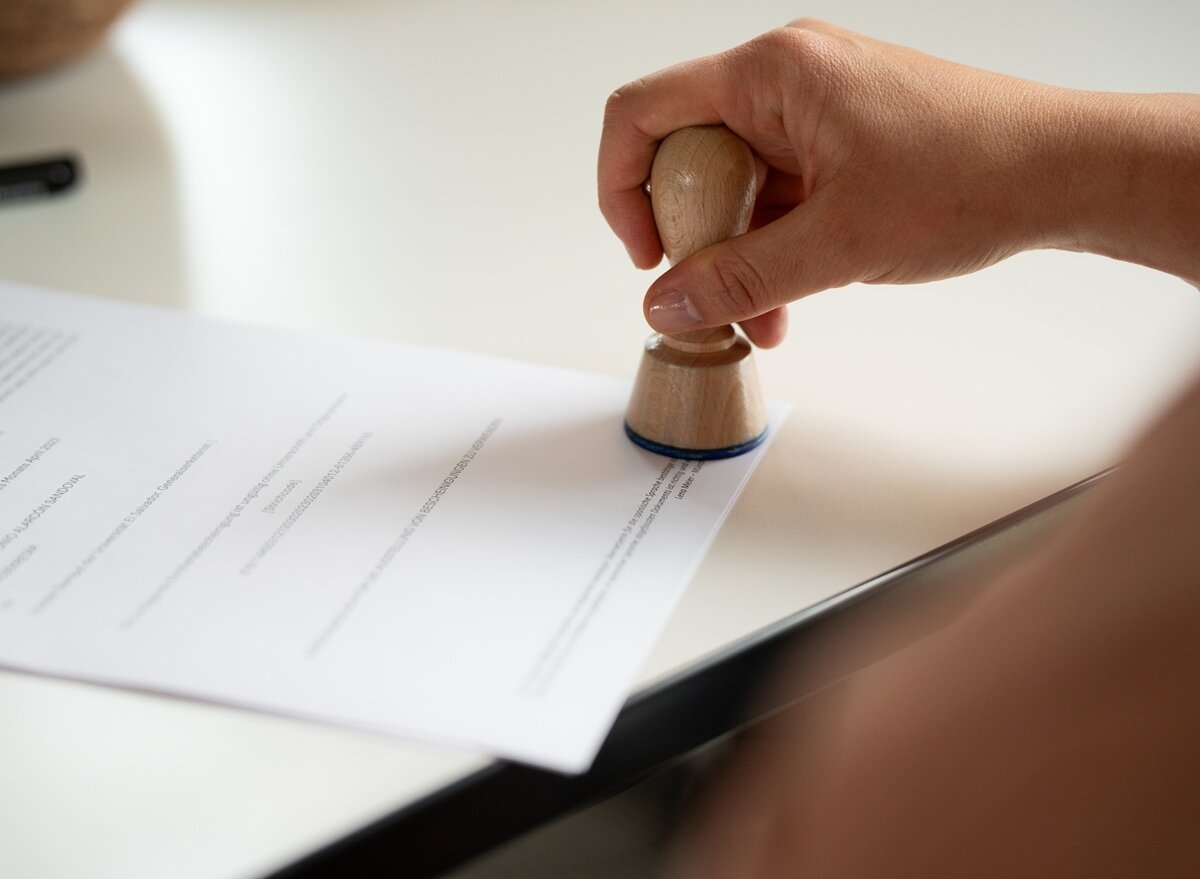
Sworn translators are officially designated. After verification that they have completed a recognised training programme or degree, the translator must take an oath. Only then are they allowed to call themselves a “sworn translator” and produce certified translations. These certified translations are primarily required for official processes at government offices, authorities or courts. With the certification note and stamp on the respective translation, sworn translators confirm the accuracy and completeness of the translation and thus also assume liability for any errors.
AI: Complement or competition?
AI translation tools are getting better and better and are no longer just a go-to for private individuals, but also increasingly for businesses too. But caution is advised!
What AI cannot do
The keyword here is liability.
AI cannot take responsibility for incorrect translations and their consequences. But this is sometimes crucial in contracts, court documents, official documents, etc. That is why public bodies, government agencies, authorities and courts rely on certified translations. As described above, these are produced by sworn translators who, in case of doubt, also assume liability for incorrect translations.
“The decisive advantage is legal protection: sworn translators guarantee the accuracy and completeness of their work with their official seal. The combination of expertise and liability provided by sworn translators offers security for customers,” explains Andrea Dormaier, Team Lead In-house Translation & Vendor Management at lingoking.
So do not rely on AI translations for important documents, such as contracts, even in a private context, because in case of doubt, you yourself will be liable.
There is another thing that AI cannot do: creativity.
AI can only reproduce what has already been created. In other words, no AI can develop new ideas. And creativity is especially important in one industry in particular: marketing. If you need marketing translations, for example to enter a foreign-language market, you can of course have your website translated by AI. However, this will be very much a word-for-word translation of the source text. Human translators do much more transfer work here, translating according to meaning and finding new creative ideas and slogans that are appropriate for the foreign-language market.
This brings us to another thing that AI is not so good at: localisation.
Every country has its own culture, which in turn shapes its language. This means that if you want to run a marketing campaign in another country, you have to include the culture of that country in the language. In some countries, very aggressive marketing is acceptable, while in others it is not. Language experts have the necessary sensitivity and know all the nuances of the respective language.
Where AI is useful
AI tools can also be very useful for translators. CAT tools have been used in the translation industry for a long time. These tools work with a terminology database called a translation memory. The CAT tool recognises previously translated or predefined words and text passages and translates them automatically. This ensures consistency and efficiency in translation.
AI can also make the translation process more efficient by pre-translating texts and having human translators check them for accuracy and consistency. We at lingoking also use AI in the translation process: “We clearly see AI as an opportunity and a productivity boost, especially in supporting our court-certified translators. At the same time, it’s important for us to remain realistic: AI is not a universal remedy. The greatest benefit isn’t in simply ‘switching on AI’, but rather by integrating it seamlessly into processes and customer ecosystems. It’s only then that the benefits for customers can really be measured – for example, through faster turnaround times or lower risks,” explains Nils Mahler, CEO of lingoking.
The future of sworn translators
“The translation industry is under massive structural pressure. Generic translations are becoming a commodity and are hardly profitable anymore. Only providers who clearly specialise and deliver real added value will have a future,” emphasises Nils Mahler.
One area of specialisation in this regard is certified translations. Due to liability issues, the authority to produce certified translations is likely to remain with sworn translators for the time being.
Moreover, anyone who values high-quality, meaningful and smart translations should continue to rely on human translators in the future. No AI can replace the creativity and experience of translators.
AI as a tool in everyday work
Translators, in turn, should make use of AI and consider how they can integrate it into their translation work. The fact is that AI will be part of translators' everyday work in the future. Those who do not use AI will be less efficient than others and will eventually become uncompetitive.
“AI will speed up the translation process enormously, but it will complement rather than replace qualified translators. While LLMs can be used to do preliminary work, human review remains irreplaceable at this point in time.”
– Andrea Dormaier, Team Lead In-house Translation & Vendor Management at lingoking
“In view of the rapid development of AI and other translation tools, the scope of work for certified translators is also constantly evolving. In the future, our main task will be to use AI in such a way that we take care of proofreading/post-editing after a rough pre-translation has been done.”
– Kim Wallinger, certified translator at lingoking
“AI will fundamentally change the role of translators. In simple, standardised cases, AI already performs many tasks today. In highly sensitive areas such as legal or certified translations, humans remain indispensable.”
– Nils Mahler, CEO of lingoking
About the author
Katharina Weckend, Content & SEO Manager
Katharina joined lingoking as a Content and SEO Manager in 2024. She handles our content and SEO strategy and writes texts for our website, guide and other lingoking media. “I am happy I get to pass on knowledge in our lingoking guide and help break down language barriers.”